

Pool party on Saturday? Picnic in the park? Glass and bare feet don’t mix, and many pools and beaches ban it anyway. So you need plastic wine glasses.
But search for them and you’ll find a hundred sets that look exactly the same. Some stay crystal-clear for years. Others turn cloudy after one summer. I’ve spent 15 years serving wine, and this guide is everything I’d tell a friend before they buy: why people choose plastic, which one is worth it, and whether you need it at all.
Short on time? The sommelier's two picks
crayline Tritan Wine Glasses, 15 oz
- 100% Tritan
- Dishwasher safe
- 15 oz tulip-shaped bowl
Best for Patio, garden table, picnic
Check today’s price See ratings and reviews ↗
Hlukana Plastic Wine Glasses, Set of 6, 16 oz
- Set of 6, 16 oz
- BPA-free
- Top-rack dishwasher safe
Best for Parties, barbecues, the pool
Check today’s price See ratings and reviews ↗First, one word you’ll see everywhere: Tritan
Tritan is a clear, hard plastic made by the American company Eastman. You already know it from reusable water bottles and blender jugs. When a plastic wine glass says “Tritan”, it is the good kind.
Looks like glass
Clear, with a proper wine-glass shape
Bounces, doesn't shatter
Survives a drop onto stone or tile
Made without BPA
A chemical found in some older hard plastics
Our pick: a stemmed Tritan glass
If you buy one set for the patio, the garden table or a picnic, make it this one.
Why this one? The bowl narrows towards the rim, like a proper wine glass, so the wine’s smell stays in the glass instead of drifting away. At 15 oz, a normal 5 oz pour fills it about a third, which leaves room to swirl.
Heading to the pool or onto a boat? Get the same features in a stemless Tritan glass. It sits lower and is much harder to knock over. Torn between the two? When a stemless glass beats a stem.
Why people choose plastic
The best wine moments often happen where glass isn’t welcome.
01Glass is banned
Many pools, beaches, boats and parks don't allow it. A shard in a pool is almost invisible in the water.
02Bare feet, kids and dogs
A dropped plastic glass bounces. A dropped glass one ends the party while someone hunts for splinters.
03Easy to carry
Light, tough and happy in a bag, a cool box or a camper van cupboard.
04Cheap in numbers
A set of eight costs less than one mouth-blown crystal glass.
05Dishwasher friendly
A good Tritan glass goes on the top rack. No hand-washing, no worry.
06Still feels like wine
A clear, stemmed Tritan glass looks right on a table, and the bowl shape still works.
Where to use them: pool, picnic, patio and more
The place decides the glass. A stem for a flat table, no stem for anywhere wobbly.
Which plastic wine glass for which place
| Where | Stem or stemless | Why | Sommelier tip |
|---|---|---|---|
| Patio or backyard | Stemmed | A flat table, and the stem keeps a warm hand off the wine | Pour less, more often, so the wine stays cool |
| Pool or hot tub | Stemless | Hard to tip over, easy to hold with a wet hand | Rinse off sunscreen: it leaves a film on the bowl |
| Picnic in the park | Stemless, or stemmed on a board | Grass and blankets are not flat | Bring a small board to stand the glasses on |
| Beach | Stemless | Glass is often banned, and sand tips a stem | Keep the bottle in the shade, not just the glasses |
| Boat | Stemless | Low centre of gravity, nothing to snap | Fill to a third at most, the boat moves |
| Camping or RV | Stemless, or a stem that unscrews | Packs small, survives a rough bag | Wrap each glass so the bowls do not rub |
| Big party or wedding | Reusable Tritan, or single-use cups | Something will be dropped | Single-use cups only if you will not wash 100 glasses |
| Kids' party or family barbecue | Either, in Tritan | Nothing to break near small feet | Use a different style for juice, so no one mixes them up |
| Dinner at the table | Real glass | The bottle deserves it | This is where your good glasses belong |
Going further? We cover each place in depth in plastic wine glasses for the pool, patio and boat, plus picnic wine glasses and camping wine glasses.
Which plastic? Tritan vs acrylic vs polycarbonate vs PET
Four plastics look the same in a photo. Only one is worth your money.
- Tritan: the modern, tough, clear plastic. The one to buy.
- Acrylic: the older picnic-cup plastic. Clear, but softer and easier to scratch.
- Polycarbonate: the hard, clear plastic that came before Tritan, usually made with BPA.
- PET and polystyrene: thin party-cup plastics, made to be used once.
The four plastics you will meet on a wine glass listing
| Material | BPA | Dishwasher | How many uses | Verdict |
|---|---|---|---|---|
| Tritan | Made without BPA | Yes, top rack | Hundreds of washes | The one to buy for reusable glasses |
| Acrylic | Made without BPA | Usually hand-wash only. Rinse aid can cause fine cracks | Many, if hand-washed | Fine if you always wash by hand |
| Polycarbonate | Usually made with BPA | Clouds and cracks fairly quickly | Fewer than Tritan | An older material. Skip it at home |
| PET or polystyrene cups | No | No, they warp | Once | Party cups, not wine glasses |
Don’t trust the number on the base. Tritan, acrylic and polycarbonate all carry recycling code 7, “other”. Only the listing or the box can tell you which plastic you’re buying, so pick a listing that names it.
One more mix-up: Schott Zwiesel sells real crystal glass that is also called “Tritan”. It’s a different material. What is Tritan? Glass or plastic? explains both.
Plastic or real glass: when to choose each
“My rule after 15 years of serving wine: plastic outside, glass at the table.”
Plastic wine glasses vs glass wine glasses
| Plastic (Tritan) | Real glass | |
|---|---|---|
| Breakage | Bounces on stone and tile | Breaks, and thin crystal breaks easily |
| Rim | Thicker, moulded | Thin, especially mouth-blown crystal |
| Aroma | A good bowl shape still works | Shape works, and nothing holds old smells |
| Weight | Light, tips over in wind | Heavier and steadier |
| Dishwasher | Top rack, for years | Most machine-made glass is fine. Thin crystal needs care |
| Lifespan | Years, until it scratches or clouds | Years, until it breaks |
| Price level | $ to $$ for a set | $ to $$$$ a glass |
| Best for | Pool, boat, beach, picnic, kids | The table and the bottles that matter |
Does wine taste different in plastic?
We couldn’t find a published test of wine in plastic against glass, so here’s the honest answer. The shape of the bowl shapes the smell, and a moulded plastic bowl can copy a good shape. What it can’t copy is a thin rim, and a thick rim is less pleasant on the lips. Plastic can also hold on to old smells, especially once it’s scratched.
So: plastic where convenience matters more than nuance, glass for the bottle you’ve been saving. If breakage at home is your real worry, there’s a tougher glass for that in do you need plastic wine glasses? What to buy instead.
How to wash them so they stay clear
Treat them gently and a good set stays clear for years.
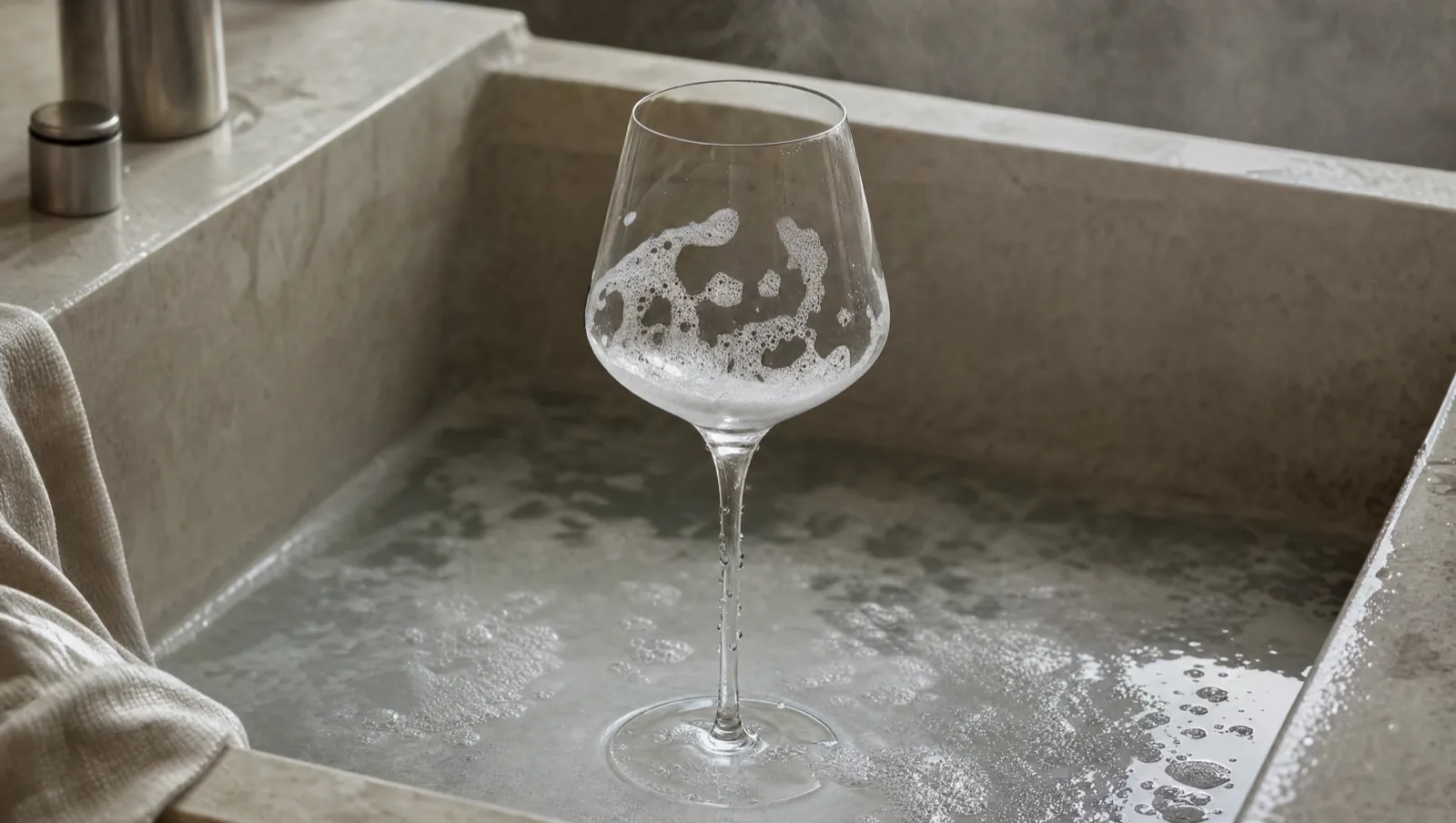
- Wash before the first use. New plastic can smell faintly of the factory or the box.
- Top rack only, away from the heating element, with the glasses spaced so they don’t touch.
- Skip heated-dry and sanitise if your machine allows. Let them air-dry.
- By hand: warm water and a soft sponge. Never a scouring pad or abrasive powder.
- Dry with a microfibre cloth. Water spots show more on plastic than on glass.
- A smell that won’t go? Soak for an hour in warm water with a spoonful of baking soda, then rinse.
- Acrylic is different: hand-wash only, and keep alcohol-based cleaners away from it.
How long do plastic wine glasses last?
There’s no expiry date. A plastic glass lasts until it scratches, clouds or cracks.
500
dishwasher washes a Tritan mug stayed clear through, in its maker's test
~5 yrs
of washing twice a week, if your glasses do as well
0
expiry dates on a plastic wine glass
How long each kind lasts, and when to replace it
| Kind | How many uses | Typical life | Replace when |
|---|---|---|---|
| Tritan, stemmed or stemless | Hundreds of washes | Years, with top-rack washing | It stays cloudy after washing, or is deeply scratched |
| Acrylic | Many, washed by hand | Years by hand. The dishwasher shortens it | Fine cracks appear in the bowl |
| Polycarbonate | Fewer than Tritan | Shorter, it clouds and cracks | It cracks or turns hazy |
| Single-use PET cups | One | One party | After the party |
Time for a new set when a glass stays cloudy after a proper wash, has scratches deep enough to catch a fingernail, keeps a smell after a baking-soda soak, or shows fine cracks, yellowing or a loose stem.
Keeping them safe: heat, sun, storage and travel
- No microwave, no hot drinks unless the listing says so. Eastman’s data sheet puts the softening point of a common Tritan grade at about 85 to 99°C (185 to 210°F) under load.
- Keep them out of the sun when not in use. Sunlight and heat are what age plastic, so not in a hot car or on the grill shelf.
- Store them upright, not stacked inside each other unless the set is made to stack. Stacking scratches the bowls.
- Wrap each glass for travel, in a napkin or a padded carrier. Plastic doesn’t break, but bowls rubbing together scratch.
- Keep them for wine and water. Strong-smelling drinks can leave a smell in plastic that wine will pick up.
Are plastic wine glasses safe to drink from?
Tritan’s maker says it is cleared for food contact. Here’s the honest detail.
BPA is a chemical used to make some plastics hard and clear, mainly polycarbonate. Tritan and acrylic are made without it. In 2012 the US Food and Drug Administration stopped allowing BPA-based resins in baby bottles and sippy cups. It did not call BPA unsafe in other food products.
“BPA-free” means only that one chemical is absent. Tritan’s maker says it has no hormone-like activity; a 2011 study disputed that, and the maker disputes the study. The evidence is unsettled, so we won’t tell you “totally safe” or “avoid”. The sensible steps: buy a glass that names its material, keep it out of the microwave, and replace it once it’s deeply scratched. More in the Tritan guide.
So, do you need plastic wine glasses?
Here’s the sommelier’s verdict. See which list sounds like you.
- You drink wine by a pool, on a boat, at the beach or anywhere glass is banned
- You host parties or barbecues where something always gets dropped
- There are children or dogs around, or bare feet on stone
- You camp, picnic or travel with wine
- You drink mostly at the dinner table at home
- Your real problem is glasses breaking in the dishwasher
- You are opening a bottle you have been saving
- You want the feel of a thin glass rim on your lips
Does the “good choice” list sound like you? Then plastic is worth owning. More like the other list? Keep glass, and if breakage is the worry, see what to buy instead. Most homes end up with both: a plastic set for outside, good glasses for the table.
Before you click buy: a 7-point checklist
- The listing names the material, ideally Tritan, not only “unbreakable”.
- It says BPA-free.
- It says dishwasher-safe, or tells you plainly to hand-wash.
- The bowl holds 12 to 16 oz and narrows towards the rim.
- You’ve chosen stem or stemless for where you’ll use it.
- No visible seam in the bowl in the photos. A seam is a sign of a cheaper mould.
- You’re buying enough glasses plus a spare. At this price, six or eight makes sense.
An honest note on how we chose: from materials, specs and the makers’ published tests. This is not a hands-on review yet. Our own test of plastic, crystal and steel glasses is planned, and this page will be updated with what it finds.
Plastic wine glasses: your questions
What are the best plastic wine glasses?
Look for Tritan, a clear, tough plastic made without BPA that looks like glass. The listing should name it, say BPA-free and dishwasher-safe, and offer 12 to 16 oz with a bowl that narrows towards the rim. Our pick is a stemmed 15 oz Tritan set from crayline, chosen from its listing rather than a hands-on test. For the pool or a boat, choose the same features in a stemless glass.
Are plastic wine glasses safe?
Reusable plastic wine glasses are sold as food-safe, and Tritan, the usual material, is cleared for food contact according to its maker. BPA-free does not mean every possible concern has been tested, and a 2011 study questioning Tritan is disputed by the maker. Keep them out of the microwave and strong heat, and replace a glass that is deeply scratched.
Are plastic wine glasses dishwasher safe?
Most Tritan sets are sold as dishwasher-safe. Use the top rack, space the glasses so they do not touch, and skip the heated-dry setting. Polycarbonate tends to cloud and crack in the dishwasher, and acrylic is usually hand-wash only. Always check the care instructions on the box or listing.
Do plastic wine glasses expire?
No. There is no expiry date. A plastic wine glass lasts until it scratches, clouds or cracks. Eastman, the maker of Tritan, says a Tritan mug in its dishwasher test stayed clear through 500 cycles, close to five years at two washes a week. Replace a glass that stays cloudy, is deeply scratched or keeps a smell.
How many times can you reuse plastic wine glasses?
Reusable Tritan glasses: hundreds of times, washed on the top rack. Acrylic: many times if washed by hand. Single-use cups made of PET or polystyrene are made for one use; they warp in hot water.
Should plastic wine glasses have a stem?
A stem suits a flat table such as a patio, and keeps a warm hand off the wine. Stemless suits the pool, boat, beach and picnic blanket, where a tall glass tips over easily.
What is the best plastic for wine glasses?
Tritan, a clear, tough plastic made by Eastman without BPA, is the usual choice for reusable glasses because it is clear, tough and resists clouding. Acrylic is fine if you always wash by hand. Single-use wine cups are usually polystyrene or PET and are made to be thrown away after one use.
Can you put plastic wine glasses in the microwave?
No. Plastic wine glasses are made for cold and room-temperature drinks. Eastman's data sheet puts the softening point of a common Tritan grade at about 85 to 99 degrees C (185 to 210 degrees F) under load.
Do plastic wine glasses change how wine tastes?
We found no published test comparing wine in plastic and in glass. A moulded plastic bowl can copy a good shape, but the rim is thicker than a crystal rim and plastic can hold on to smells. For a wine you care about, pour into glass.
Why do plastic wine glasses go cloudy?
Heat, strong detergent, hard water and scratches. Wash on the top rack, avoid scouring pads, dry the glasses, and replace one that stays cloudy after washing.
Are plastic wine glasses BPA-free?
Tritan and acrylic glasses are made without BPA. Polycarbonate is usually made with it. Choose a listing that states BPA-free and names the material.
Keep reading
Some links on this site are Amazon affiliate links. If you choose to buy through them, a small commission may be earned at no extra cost to you.