The Best Universal Wine Glasses (2026)
One bowl for red, white and sparkling — and the four worth buying, from budget to splurge.
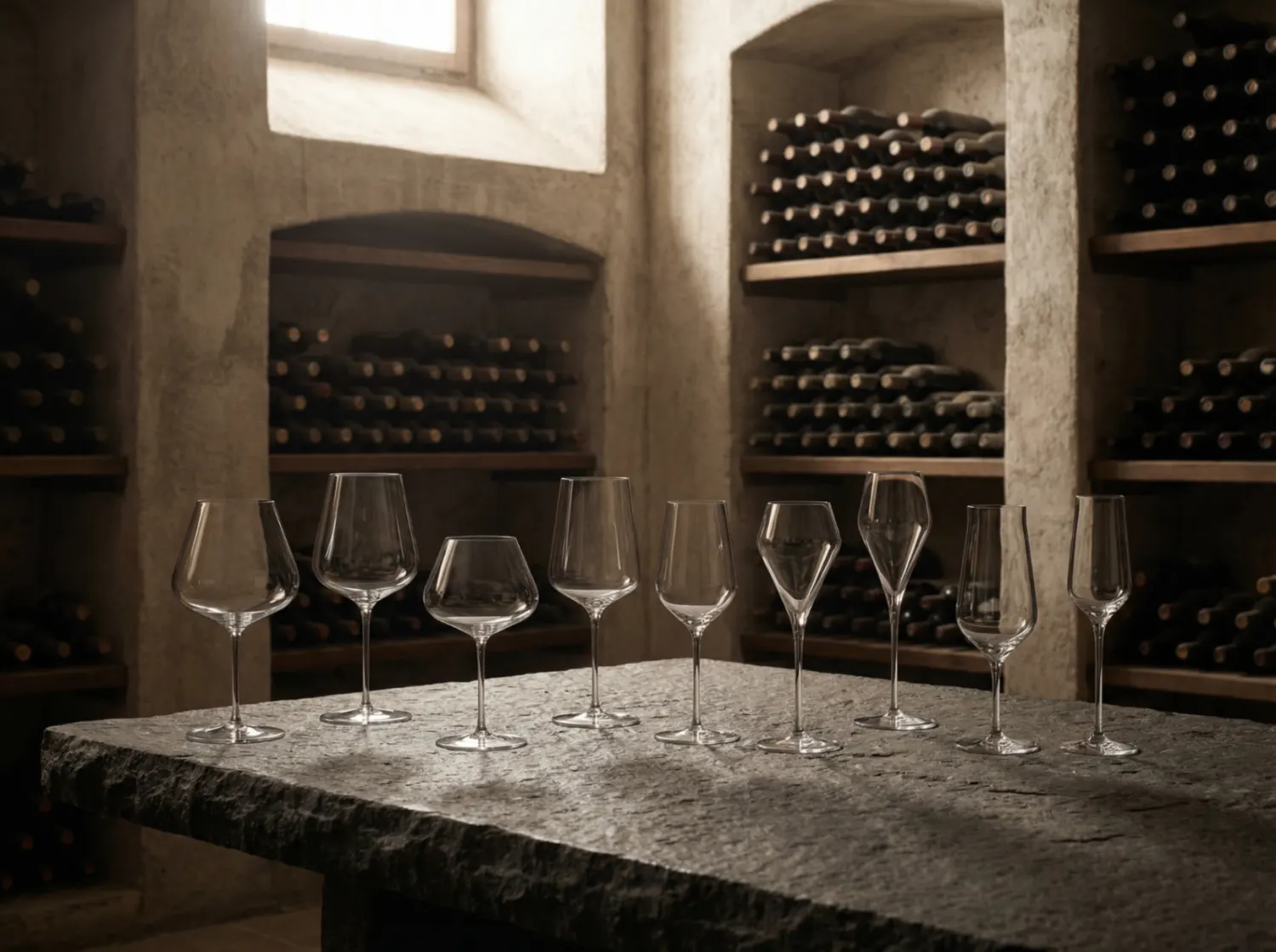
Short answer
The best universal wine glass is the Zalto Denk'Art Universal — 530 ml, mouth-blown in Austria, and the shape most working sommeliers keep at home. For daily use and the dishwasher, a Schott Zwiesel Tritan universal is the durable answer; Chef & Sommelier covers the same idea on a budget.
How we chose
No brand sponsorships and no paid placements. We cover four brands in depth — Zalto, Riedel, Schott Zwiesel and Chef & Sommelier — because between them they span the full range from budget to splurge, and we can stand behind every claim we make about them. Specifications below are published manufacturer figures, checked in August 2026.
Zalto Denk'Art Universal
Best for: One glass for everything you drink
530 ml, 235 mm tall, mouth-blown from lead-free crystal in Austria, and dishwasher safe despite how fragile it looks. The bowl is angled rather than round, which is why so little swirling is needed to get aroma moving. It is the universal glass most working sommeliers keep at home, and the one every rival in the category is priced against.
Riedel
Best for: A recognisable brand, stocked almost everywhere
Riedel invented varietal-specific glassware in 1986 and is the easiest of these four to actually buy. Worth knowing before you order: Vinum is the varietal-specific range — separate Cabernet, Pinot Noir and Riesling bowls — not a universal glass. If you want one Riedel that covers everything, ask for an all-purpose or universal shape rather than a Vinum bowl.
Schott Zwiesel Tritan
Best for: Households that drink often and hand-wash never
Tritan crystal is titanium-reinforced, which is why restaurants buy it by the case — it survives thousands of dishwasher cycles without clouding or chipping at the rim. Made in Germany. It will not out-perform mouth-blown crystal on a special bottle, and the rim is thicker than anything else here, but it is the only one of these four we would leave out around a full table without thinking about it.
Chef & Sommelier
Best for: A first proper set, without the splurge
France's Chef & Sommelier makes a durable lead-free crystalline glass that genuinely punches above its price — the kind restaurants buy by the pallet because it looks and pours like something twice the cost. If the goal is simply to stop drinking good wine out of the wrong glass, start here and spend the difference on the bottle.
Prices are approximate and shown per glass; they change often. As an Amazon Associate we earn from qualifying purchases.
How to pick between them
Almost every meaningful difference here reduces to one question: how the glass was made. Mouth-blown crystal gives you a thinner rim and far less weight in the hand, and it costs more because a person made it. Machine-made crystal gives you consistency, availability and a glass you are not afraid of. Neither is better in the abstract — they answer different questions.
Capacity matters less than people assume once you are in the right range. Anything around 450–550 ml gives a normal pour room to open without becoming a fishbowl. What you are really choosing between at that point is rim thinness, weight, and how much a broken glass would bother you.
The honest advice: if breaking one would genuinely upset you, do not buy mouth-blown. Thin crystal breaks — usually in the sink, usually against a tap, usually in the first year. That is not a defect, it is the trade you make for the rim. Buy the Tritan or the Chef & Sommelier and put the difference into wine. The full brand comparison sets all four side by side.
Best universal wine glasses — FAQ
What is the best universal wine glass?
The Zalto Denk'Art Universal — 530 ml, mouth-blown in Austria, and the glass the rest of the category is measured against. If you want the same idea without the fragility or the price, a Schott Zwiesel Tritan universal shape survives daily use and the dishwasher, and a Chef & Sommelier costs a fraction as much while still giving you a properly shaped bowl.
Is a universal wine glass really enough, or do I need varietal-specific shapes?
For nearly all still wine, one good universal bowl is enough. The gap between a universal glass and a varietal-specific one is small compared with the gap between a universal glass and a thick, badly shaped one. The single shape genuinely worth owning alongside it is a narrow Champagne tulip — not a flute — for sparkling wine.
What capacity should a universal wine glass be?
Roughly 450–550 ml. The Zalto Universal is 530 ml, and anything in that range gives a normal 150 ml pour enough room to open up without turning the glass into a fishbowl. Below about 400 ml there is not enough headspace above the wine for aroma to collect; much above 600 ml and you are into Burgundy-bowl territory, which flatters Pinot Noir and does very little for anything else.
Is the Riedel Vinum a universal wine glass?
No, and it gets called one often enough to be worth correcting. Vinum is Riedel's varietal-specific line, launched in 1986 — you buy a Cabernet/Merlot bowl, a Pinot Noir bowl, a Riesling bowl, each shaped for one grape. For a single Riedel that handles everything, look for an all-purpose or universal shape instead.
Are universal wine glasses dishwasher safe?
All four brands here are rated dishwasher safe by their makers, including the mouth-blown Zalto. Rated and advisable are different things: thin hand-blown crystal usually breaks from knocking against something in the rack, not from heat or detergent. Load them so nothing can touch, and skip the heated dry cycle. Schott Zwiesel's Tritan is the only one of the four genuinely designed for it.
How many universal wine glasses should I buy?
Six covers two people who host occasionally. Regular hosts do well with twelve universal glasses plus six Champagne tulips. Do not buy a 24-piece set on day one — buy six, live with them for a month, and see how many you actually break before committing to a full cabinet.