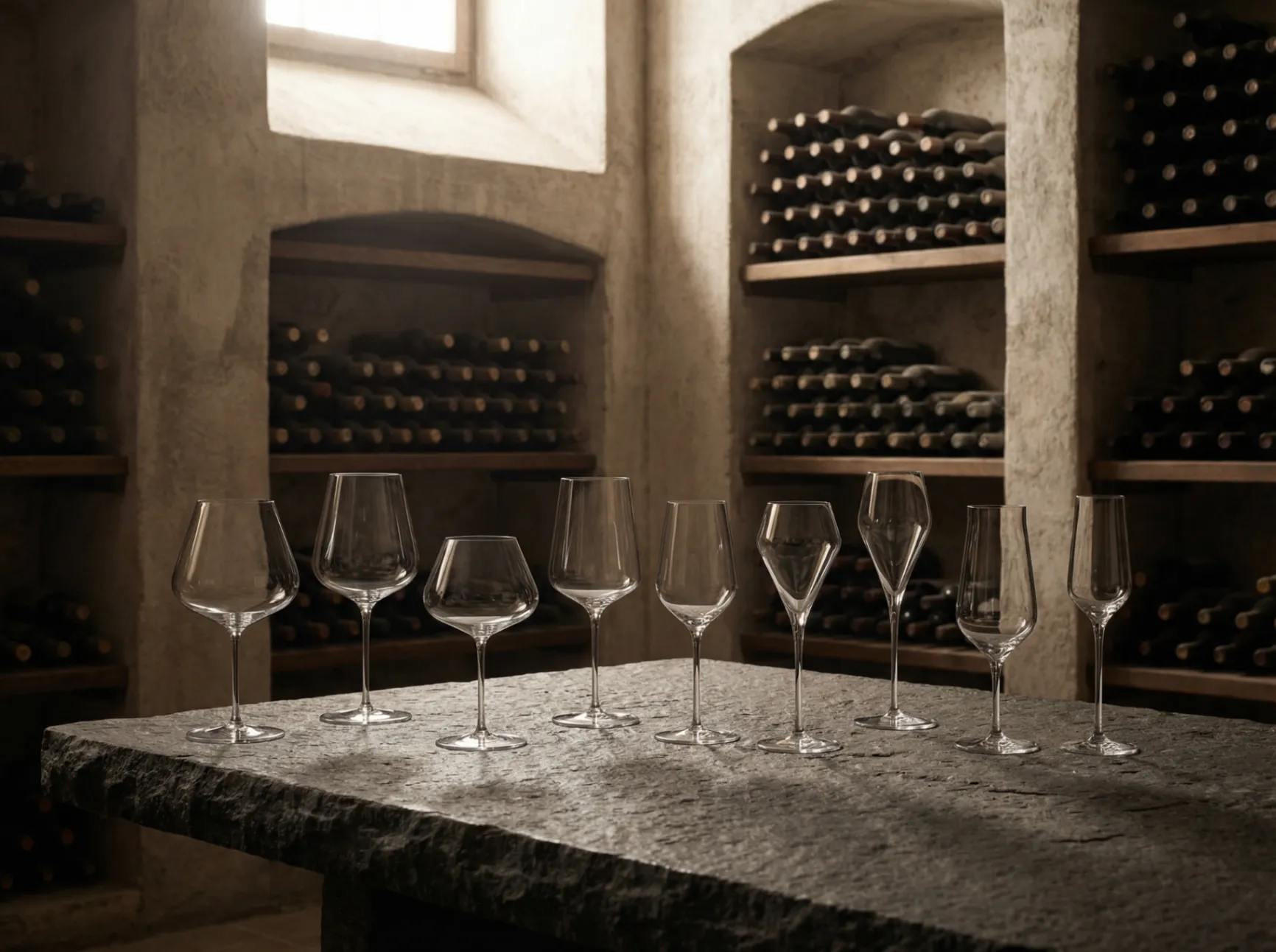
The Best Wine Glasses (2026)
One glass, evaluated the way a working sommelier actually judges glassware — plus the value, durable and Champagne picks worth knowing about.
How we chose
No brand sponsorships, no paid placements. We cover four brands in depth — Zalto, Riedel, Schott Zwiesel and Chef & Sommelier — because between them they span the full range from budget to splurge, and we can stand behind every claim we make about them. Below is what we'd actually buy, and the exact criteria we used to decide.
How we evaluate a wine glass
This isn't a lab panel — it's the same checklist used to buy glassware for a restaurant or tasting room, applied here to a home cabinet. Five things, in order of how much they actually matter to what's in your glass:
- 1. Rim thickness and cut
- A thin, laser- or hand-cut rim all but disappears against your lip, so nothing comes between you and the wine. A rolled or thick rim is the single biggest reason an inexpensive glass feels cheap.
- 2. Bowl shape and capacity for the wine it's meant for
- Tall and narrower for structured reds, wider and rounder for delicate aromatics, tapered and smaller for chilled whites, a narrow tulip — not a flute — for sparkling. The shape isn't decoration; it changes where the wine lands on your palate and how much aroma reaches your nose.
- 3. Balance and weight in the hand
- A well-made glass feels light and centred over the stem, not top- or bottom-heavy. This is the difference you notice in the first five seconds of picking one up, before you've even poured anything.
- 4. Material and clarity
- Lead-free crystal (Zalto, Riedel) versus titanium-reinforced Tritan (Schott Zwiesel) versus lead-free crystalline glass (Chef & Sommelier) — all are genuinely clear and modern; the real trade-off between them is fragility versus durability, not clarity.
- 5. Durability versus how you'll actually live with it
- Hand-blown crystal is glorious and fragile. Titanium-reinforced glass survives the dishwasher and daily use. Neither is "better" in the abstract — the right answer depends on whether you're buying a glass for a special pour or for Tuesday night.
The picks
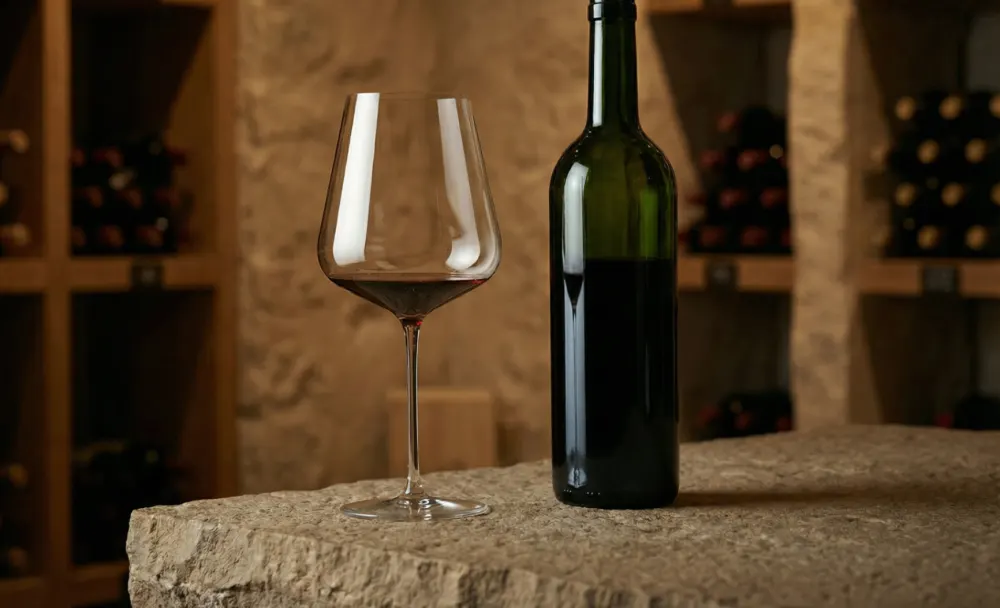
Zalto Denk'Art Universal
Best for: One glass for everything you drink
Mouth-blown in Austria, absurdly light, and built with a bowl proportioned to handle reds, whites and sparkling without embarrassing any of them. It's the glass most working sommeliers actually own themselves — not because it's the most dramatic shape for any single wine, but because it's the best compromise for a household that doesn't want six different shapes in the cabinet.
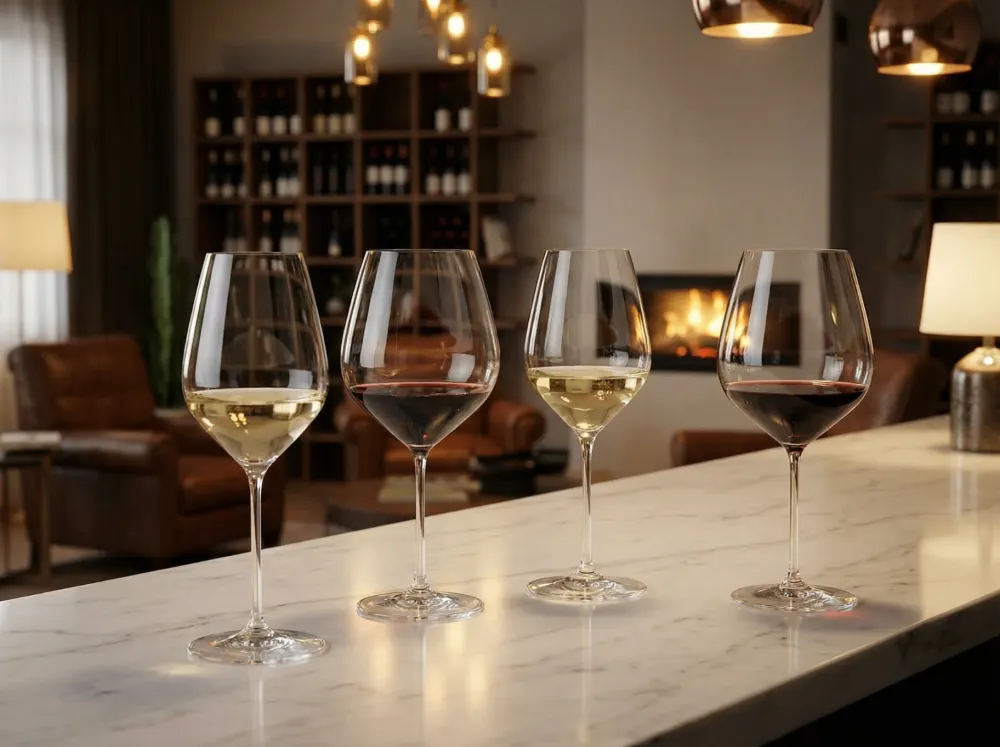
Riedel Veloce
Best for: A recognisable name, at half the price of hand-blown crystal
Riedel's machine-made Veloce line gives you a properly varietal-shaped bowl and a real pulled stem for a fraction of what Zalto costs. It's more available, more robust, and it's the glass we point people to when they want a name they already trust rather than a specialist import.
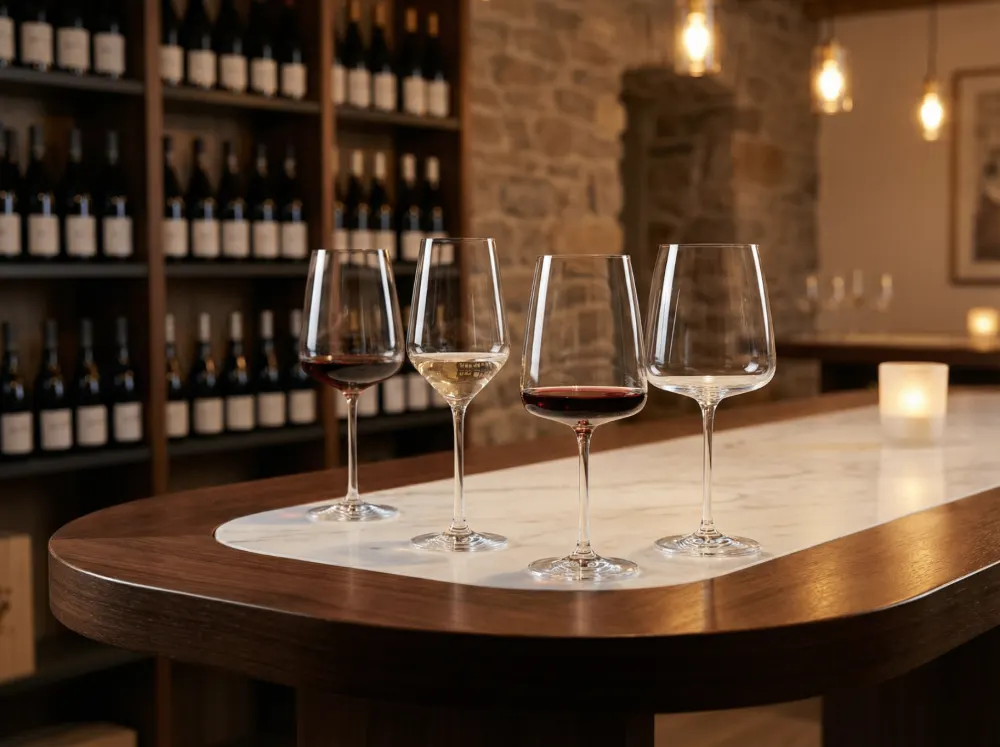
Schott Zwiesel Tritan
Best for: Households that drink often and hand-wash never
Tritan crystal is titanium-reinforced, which is why restaurants buy it by the case — it survives thousands of dishwasher cycles without clouding or chipping. It won't out-perform hand-blown crystal for a single glass of Burgundy, but it's the only one of these four we'd trust around kids, guests, and a busy weeknight.

Chef & Sommelier Krysta
Best for: A first proper set, without the splurge
France's Chef & Sommelier makes its Krysta glasses from a durable lead-free crystalline glass that genuinely punches above its price — the kind restaurants buy by the pallet because it looks and pours like something twice the cost. If you just want to stop drinking out of the wrong glass without spending real money, start here.
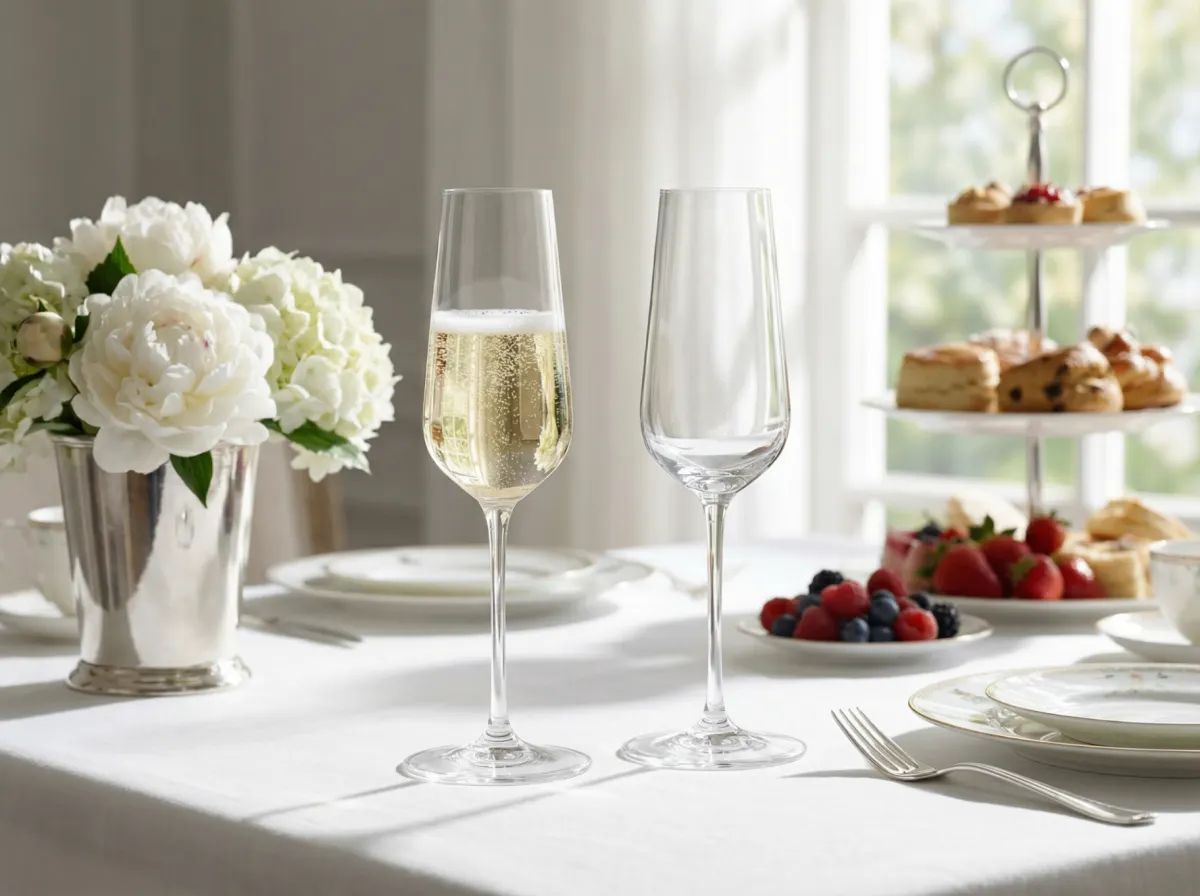
A tulip-shaped Champagne glass
Best for: Champagne, Crémant, Cava, and other sparkling wine
Skip the flute. A tall, narrow tulip — Zalto and Riedel both make one — holds the mousse the way a flute does but has enough of a bowl to actually smell the wine, which a flute doesn't. It's the shape sommeliers reach for now; the flute survives mostly as a toast glass at weddings.
Prices are approximate and shown per glass; they change often. As an Amazon Associate we earn from qualifying purchases.
What about other brands?
You'll see these names come up a lot. Here's where they stand, honestly.
What about Gabriel-Glas?
Gabriel-Glas's StandArt is a genuinely respected one-piece universal glass — seamless, machine-blown, and a real rival to Zalto's Universal at a lower price. We haven't put it through the same hands-on, long-term comparison we've done with Zalto, Riedel, Schott Zwiesel and Chef & Sommelier, so we're not ranking it here yet, but it's a legitimate option if you come across it.
What about Libbey, Spiegelau or Josephinehütte?
Libbey's Signature Kentfield is a solid, inexpensive everyday glass and a common pick in US roundups; Spiegelau (a Riedel-owned sister brand) makes reliable machine-made crystal at accessible prices; Josephinehütte is a newer luxury mouth-blown option that's earned attention for its ultra-thin rim. All are worth knowing about — we've focused our in-depth reviews on the four brands above because they span the full range from budget to splurge and we can stand behind every claim we make about them.
Do I need a stemless wine glass too?
Only if you want one. Stemless glasses trade a little aroma concentration and temperature control (your hand warms the bowl faster) for being harder to knock over and easier to store. They're a fine second set for casual, outdoor or everyday pours — just not our pick when the goal is showing a wine at its best.
Best Wine Glasses — FAQ
What is the single best wine glass to buy?
For most people, a good universal glass — the Zalto Denk'Art Universal if budget allows, otherwise a Riedel Veloce or Schott Zwiesel Tritan universal shape. One well-made all-purpose bowl handles reds, whites and sparkling wine better than most people expect, and it's the realistic answer for anyone who doesn't want a cabinet full of specialty shapes.
How do sommeliers actually evaluate a wine glass?
By rim thickness and how it's cut (a thin, cut rim disappears against the lip; a rolled rim doesn't), bowl shape relative to the wine it's meant for, balance and weight in the hand, clarity of the crystal, and how it performs on repeated dishwasher cycles versus how it feels for a single special pour. It's the same checklist used to buy glassware for a restaurant or tasting room, just applied to a home cabinet.
Is expensive crystal actually worth it, or is that marketing?
The jump from a thick, cheap glass to any well-shaped, thin-rimmed one is real and noticeable — that's not marketing. Past that first upgrade, you're increasingly paying for hand-blown craftsmanship, lightness and prestige rather than a dramatically different taste in the glass. Buy the best glass you'll actually take care of, not the most expensive one you can find.
One glass for everything, or different shapes for red, white and sparkling?
A genuinely good universal glass is a legitimate choice, not a compromise — it's what many sommeliers keep at home themselves. If you want to go further, the next upgrade isn't more shapes for every grape, it's exactly two: a red/white universal bowl and a proper Champagne tulip for sparkling wine.
How many wine glasses should I actually own?
Six good universal glasses covers two people who host occasionally. Regular hosts do well with twelve universal plus six Champagne tulips. Don't buy a 24-piece boxed set on day one — buy six, see how you actually use them, then add.